QUALITY & TESTING
Quality Control & Testing
Agree the inspection, test and documentation requirements at the model and purchase-order level.
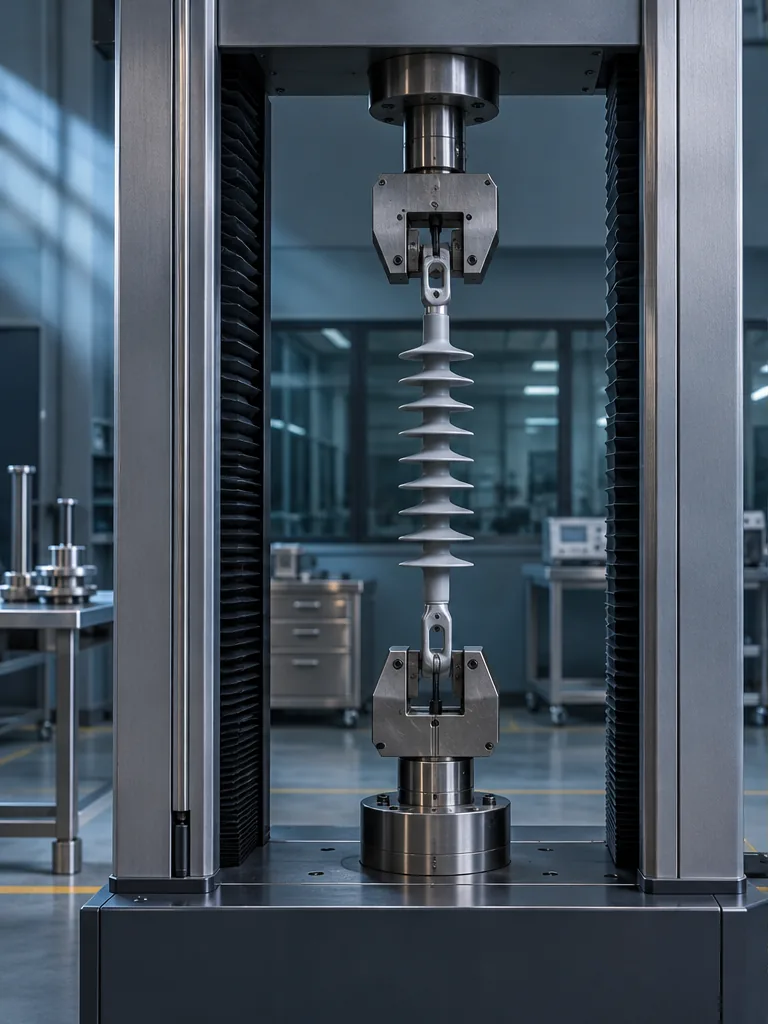
Incoming material inspection
Review steel grades, FRP rod and silicone compound batch records against the purchase specification. Check zinc coating thickness on galvanized lots where applicable.
In-process checks
Verify dimensions, coupling fit and material traceability. For composites, review moulding and end-fitting attachment criteria against the approved drawing and control plan.
Routine and acceptance tests
Agree the model-specific inspection plan. Identify routine mechanical or electrical checks, sampling, and any wet power-frequency withstand or impulse evidence required by the purchase specification.
Packing and release
Match labels, quantities and drawing revisions to the BOQ. Agree moisture protection and packing details for ocean shipment.
TENDER SUBMITTALS
Request the evidence your tender requires.
Laboratory scope
Specify tensile test capacity, power-frequency test equipment range and calibration evidence required for the selected model.
Management system documentation
Where applicable, request current ISO 9001, ISO 14001 or ISO 45001 copies. Verify the legal entity, certification scope and expiry against the tender.
Third-party reports
Where a tender names KEMA or requires a CNAS-accredited laboratory, specify the accepted lab and test scope. Confirm the tested model, report number and standard edition.